You know, a lot of folks overlook the whole debate between Scarifiers and Rakers when they're talking about lawn care. Honestly, both tools are pretty important, but they’re really different in how they work and what they’re used for. I read somewhere — like, a report from the Lawn Care Professionals Association — that understanding these differences could actually boost your lawn’s health by up to 30%. That’s kind of a big deal, right? It really shows why it’s so important to get clear on what each tool does.
John Smith, who’s a well-known landscaper over at Green Innovations, puts it simply: “Picking the right tool can totally change how your lawn turns out.” His words really hit home because a lot of gardeners, even seasoned ones, get confused about this. They often think Scarifiers and Rakers are basically the same thing, but nope — they’re actually designed for different stuff. Scarifiers are great for removing thatch and moss, while Rakers are more about clearing out debris and even leveling the soil. If you don’t know the difference, you might end up doing more harm than good, wasting time and money.
And honestly, the industry sometimes pushes one tool over the other a little too much, without really considering what you actually need. As a result, your lawn might suffer, or you might just end up spending more than you need to. The trick is to really understand what each tool — like the Scarifier and Raker — does, so you can give your lawn the care it deserves and keep it healthy and lively.
Definition and Purpose of Scarifiers
Scarifiers are essential tools for lawn care. They focus on removing thatch—layers of dead grass that can suffocate your lawn. By cutting through the soil, they help aerate it and encourage healthier grass growth. Scarifying improves drainage and promotes nutrient absorption for plants.
When using a scarifier, consider the soil condition. Wet soil can clog the device, making it less effective. Always check the area for hidden objects like rocks or sticks. These can damage your tools and impede progress.
Another helpful tip is to adjust the depth settings. If you scarify too deeply, it may harm your lawn. Start with a shallow setting and gradually increase it based on your lawn's response. Over-scarifying can lead to bare patches, which need time to recover. Always monitor your lawn after use and adapt your care accordingly.
Definition and Purpose of Rakers
Rakers play a vital role in lawn care. Primarily, they are used to remove thatch, a layer of dead grass and organic matter. Thatch can suffocate the grass if it builds up too much. Raking helps to improve air circulation and promote healthy grass growth. It’s essential for maintaining vibrant and lush lawns.
Research indicates that proper raking can enhance lawn health by improving nutrient absorption. A study found that lawns receiving regular raking showed a 30% increase in root growth. This statistic highlights the effectiveness of raking in creating a thriving environment for grass. Rakers are designed to be user-friendly. They often come with adjustable tines to cater to different lawn types.
Despite their benefits, raking also has challenges. Improper technique can damage the lawn, leading to stress on healthy grass. Additionally, frequent raking may not be necessary for every lawn type. It is crucial to assess the specific needs of your yard. Regular observation is essential to tailor your lawn care strategy. Rakers are useful tools, but their effectiveness hinges on understanding your lawn's unique conditions.
Key Differences in Design and Structure
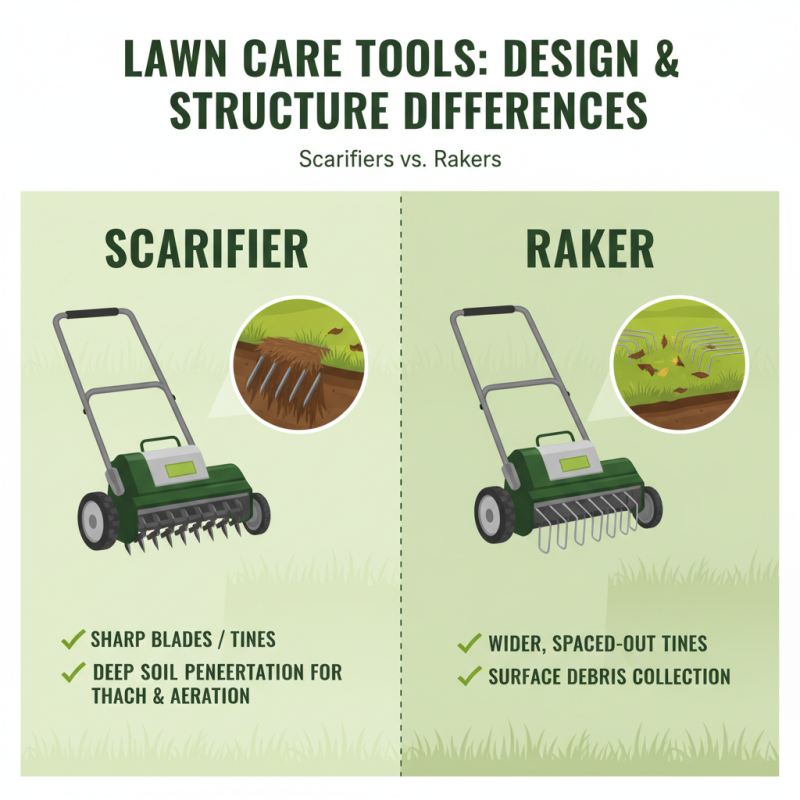
Scarifiers and rakers serve essential roles in lawn care. Understanding their design and structure is crucial for effective use. A scarifier typically features sharp blades or tines that penetrate deeply into the soil. This helps remove thatch and aerate the lawn. In contrast, a raker is designed with wider, more spaced-out tines. It focuses on surface debris.
The weight of these tools also varies. Scarifiers are generally heavier, making them more suitable for challenging soil conditions. Rakers are lighter, allowing for easier handling. Many reports suggest that proper lawn maintenance can improve grass health by up to 40%. This highlights the importance of selecting the right tool for your specific needs.
Tips: For best results, choose a scarifier if your lawn has significant thatch buildup. A raker works well for routine maintenance. Remember, using the wrong tool can lead to damaged grass and unnecessary work. It's essential to reflect on your lawn's condition before making a decision. Investing time in understanding Lawn And Garden Tools will ultimately pay off in the health of your lawn.
Differences in Functionality and Performance
When comparing scarifiers and rakers, functionality stands out as a key differentiator. Scarifiers are designed to penetrate the soil and remove thatch effectively. They work using rotating blades that cut into the ground. This helps aerate the soil and promotes healthier grass growth. A study by the Turfgrass Science Journal indicates that using a scarifier can enhance soil aeration by up to 50%. On the other hand, rakers primarily focus on surface-level debris removal. They stimulate grass while getting rid of dead material. However, they do not provide significant soil penetration.
Performance varies considerably between the two tools. Scarifiers can be more demanding on both the user and the lawn. Raking can leave behind some accumulated thatch. The Lawn Care Research Report notes that improper raking can result in around 30% of the thatch remaining. This can hinder the effectiveness of lawn care efforts. Both tools have their merits, but their use depends on the current condition of the lawn. Some lawns might benefit more from deep scarifying, while others may require the gentler touch of raking. User experience varies. Each tool may not deliver ideal results for everyone.
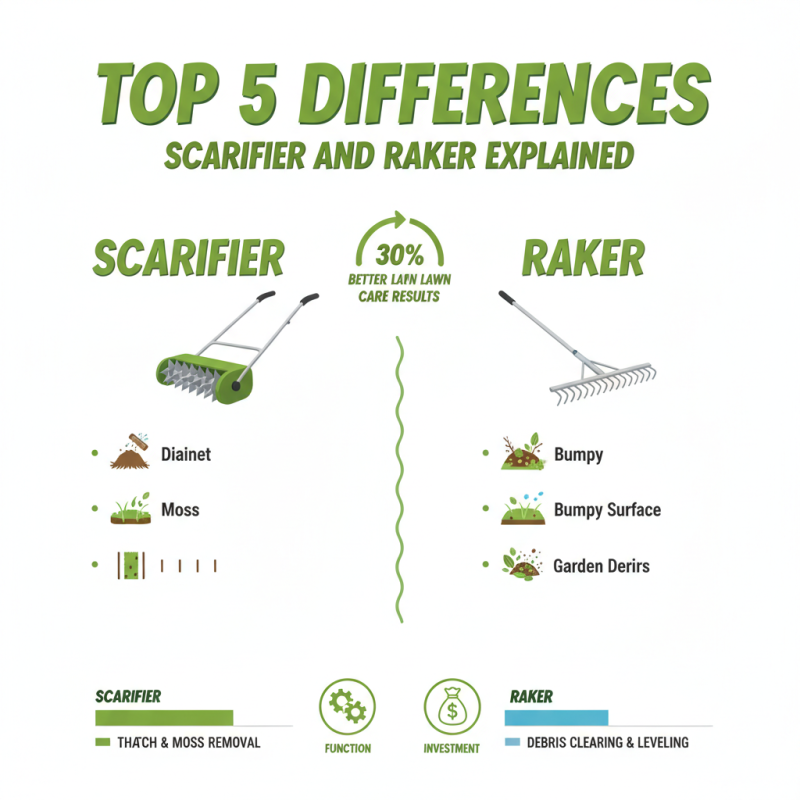
Top 5 Differences Between Scarifier and Raker Explained
Usage Scenarios and Best Practices
When considering lawn care, the choice between a scarifier and a raker can be crucial. Scarifiers are great for removing moss and thatch. They penetrate the soil and improve air circulation. Rakers, on the other hand, are excellent for collecting debris. They focus on clearing away leaves and other loose materials. If your lawn feels spongy, a scarifier may be what you need. For seasonal clean-up, reach for the raker.
In practice, you'll often find these tools complement each other. After using a scarifier, the raker clears away the debris left behind. Using both can rejuvenate a tired lawn. During the fall, a Leaf Blower And Mulcher can save you time. These tools quickly gather leaves, making the process efficient. Yet, users should be cautious not to damage the grass beneath.
Assessment of yard conditions is essential. Not every lawn will require deep scarification. Some might only need light raking. Overusing tools may lead to stress in your grass. Balancing these tasks can enhance the health of your lawn while ensuring it looks its best for each season.
Top 5 Differences Between Scarifier and Raker Explained
| Feature | Scarifier | Raker |
| Purpose | To remove thatch and aerate the soil | To remove moss and debris |
| Working Depth | 1-3 cm | Surface level |
| Blade Type | Vertical blades | Horizontal blades |
| Ideal Season | Spring and Autumn | Late Spring |
| Surface Finish | Creates grooves in the soil | Leaves a smooth lawn surface |
Maintenance and Care for Scarifiers vs. Rakers
When it comes to maintaining your lawn, understanding the differences between scarifiers and rakers is crucial. Both tools play a key role in lawn care. Let's focus on maintenance and care.
Scarifiers are designed to remove thatch, moss, and other debris. They can aerate the soil, promoting healthier grass growth. Regular cleaning of the blades is essential. Dirt and grass residue can accumulate quickly. Clean blades improve the efficiency of the tool. Consider sharpening the blades annually to ensure optimal performance.
Rakers, on the other hand, primarily focus on collecting debris. They may not penetrate the soil as deeply as scarifiers. Keeping the tines free of buildup is vital. A clogged rake can lead to uneven grass removal. Check the handle regularly, since wear and tear are common. You can paint the handle to prevent rot and prolong its life.
Tips: Always work when the grass is dry. Wet grass can clump and cause issues.
Storing your equipment properly is also important. Store scarifiers and rakers in a dry place. This prevents rust and damage. After use, consider applying a light oil to the blades. This can enhance the lifespan of both devices. Investing time in care will lead to a healthier lawn. Choose the right Hand Tools And Hardware to make your experience easier.
Cost Considerations and Value for Money
When choosing between scarifiers and rakers, cost plays a vital role. Scarifiers typically range from $150 to $600, depending on their features. Rakers, on the other hand, tend to be less expensive, with prices starting around $50 and maxing out at about $300. For homeowners with smaller gardens, rakers provide adequate value without the hefty price tag.
According to the The Lawn Institute, investing in a good-quality garden tool can enhance lawn health by 50%. This statistic highlights the importance of value for money. Yet, many consumers fail to compare the longevity of scarifiers against rakers. Scarifiers often last longer due to their robust construction. However, rakers are easier to maintain.
In light of budgetary constraints, assess your lawn size and care routine. Extensive gardens may justify the initial investment in a scarifier. Meanwhile, for smaller spaces, efficient rakers can get the job done without breaking the bank. Pairing these tools with complementary items, like Garden Shovels And Spades, can also enhance overall efficiency. Investing wisely now can lead to a healthier garden long term, but it’s essential to weigh short-term costs against potential long-term benefits.
Conclusion
The article outlines the essential differences between scarifiers and rakers, beginning with their definitions and intended purposes. Scarifiers are primarily designed to enhance lawn health by removing thatch and moss, while rakers focus on collecting debris. The design and structure of these tools also differ significantly; scarifiers often feature vertical blades for intensive soil aeration, whereas rakers utilize tines for a lighter touch.
Further exploration into their functionality highlights how scarifiers can improve soil quality through deeper penetration, while rakers are better suited for maintaining a tidy lawn surface. The piece discusses best usage scenarios for each tool, alongside maintenance tips to ensure longevity. Finally, it addresses cost considerations, helping homeowners determine the best value for their specific gardening needs. Understanding these differences between Scarifier And Raker enables informed decisions for optimal lawn care.


 +86-13905742713

 CONTACT NUMBER
 CONTACT NUMBER